
Is all investor money the same? See what they take in consideration and discover if your startup is ready to raise capital
A long runway is crucial to any young, up & coming company — the breathing room every founder & CEO yearns for in order to turn the corner, reach the next milestone, and more importantly time to crush it!
If you have a proven concept with demonstrable performance milestones, you may be ready for the “big ask” to professional investors. The investor meetings are daunting and you MUST be prepared!
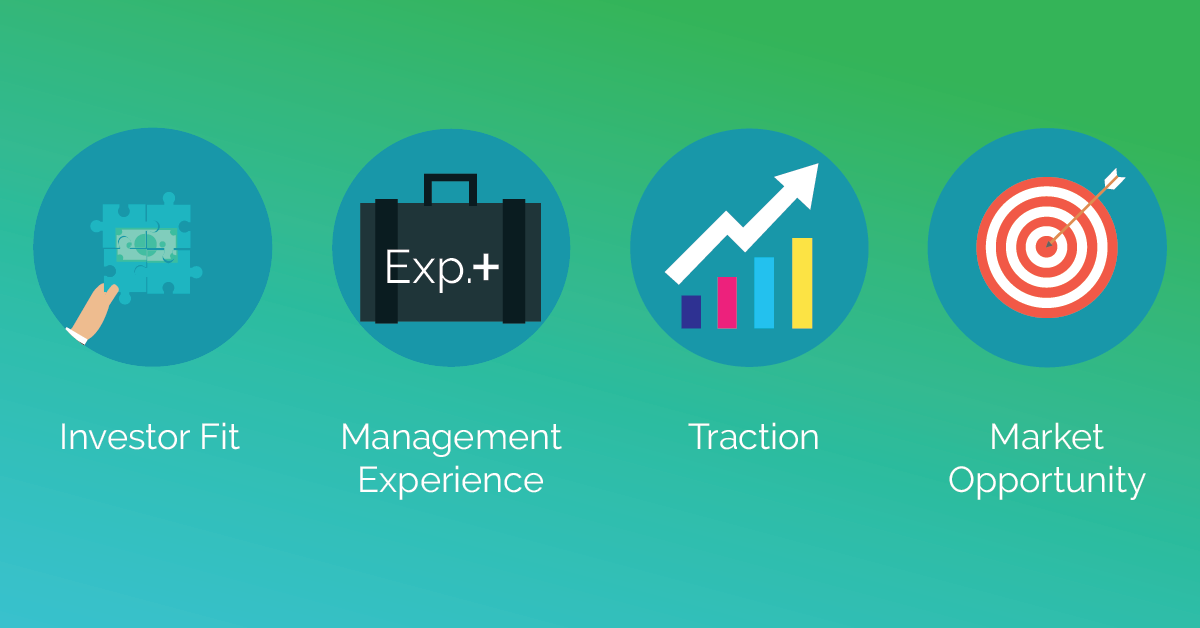
What are investors seeking in an investable company? How will they evaluate your company? What can you expect in these conversations? The answer of course is — it depends. Each situation varies upon the investor’s profile in areas such as type of investor (angel vs. VC), risk tolerance, company’s life cycle (early stage vs. late stage vs. operational), portfolio preferences, and geographic location. Moreover, the current economic climate adds extra scrutiny as investors evaluate your proposal. The perfect combination is different for each investor. However, it all boils down to these key items:
Investor Fit
Finding suitable investors is one of an entrepreneur’s biggest challenges. Be very selective and try to find investors who add not only money, but also value to your business. Keep this in mind before approaching any investor: what do you need? What specifically do you want from the investor? What type of investor can deliver the goods?
Investors have specific criteria and standards for determining their investment decisions. As such, the search for the perfect match differs dramatically based on your answers to the aforementioned questions. For example, if you are an early stage startup you may need more than just money, whereas a late stage firm already operational may not require hands-on coaching. Ultimately, however, the investor’s risk profile, preferences, and requirements drive every decision irrespective of whether you are an early or late stage company. Therefore, it is crucial you concretely define your needs in order to determine your “ideal investor”.
Not all investor money is the same —
select investors who are aligned with your vision and who add value to your business
Investors, especially angel investors, tend to get involved with companies that maximize their industry expertise and core competencies. It is fundamental to consider their focus and criteria related to:
- industry expertise and the investment portfolio focus
- the company’s stage of development
- the amount of capital that needs to be raised
- the geographic location of the enterprise
It is essential your company complements the investors’ requirements. Your efforts will generate better results by reaching out only to those investors who’s interests are aligned with your company.
Throughout the process, don’t forget to ensure that the investor also fulfills your needs. One of the benefits of investment is accessing expertise that helps your business move forward. Therefore, seek out the investors of successful companies somewhat similar to yours who can appreciate your product/service and contribute towards your success. Those angels will understand the market, have extensive experiences to offer, and will be more likely to appreciate the product or service you are trying to build. These ideal investors secure the company’s efforts yield high impact and high ROI.
Management Experience
The entrepreneur’s management team is, perhaps, THE most important element in attracting potential investors. It signals your venture has the savviness to create a “must have” product/service, encompasses the multi-disciplinary skills to manage the business, and capabilities to rapidly address the ever changing conditions successfully. Most importantly, your team has the proven track record in the venture’s industry!
Investors place great emphasis on the management team because it is the one area that significantly impacts the business — the right team propels the business to greatness while the wrong team kills it. The conditions encountered by startups are constantly changing. Given that, many things will go wrong and the one mitigating factor for setbacks is a great team. Therefore, an investor counts on the leadership team’s know-how in order to navigate successfully through the unexpected. If your management team cannot execute the business plan, or if they alienate the customers, or cannot hire and manage good people, then the business likely will fail. However, a strong leadership has the capability to reshape its strategy and redirect the firm.
No matter how unique or brilliant a business idea might be, they need to be produced and executed by people. So to fund a company, an investor needs to believe in the existing CEO capability to make it a success Your top priority is securing a talented senior leadership team.
Market Opportunity
Despite their differences, VCs, seed stage investors and series or A, B investors all want to believe your company CAN be big one day. Every investor cares about investing in big markets with ambitious teams.
Investors typically put their money in solutions that address major problems for significantly large target markets — easily satisfying their expected rate of return. An investor’s’ priority is meeting their expected return and an opportunity to addresses a billion dollar market is difficult to pass for even the most conservative investor. That said, while large markets may make it easier to reach/exceed ROI, niche market ventures are not dismissed since they can provide equally appealing returns. Other crucial considerations included by investors are high growth rates as well as the ability to generate multiple sources of revenue and significant profits.
It is imperative that you illustrate a complete picture of your ventures’ current and future market potential. A realistic perspective of the addressable market will serve to:
- highlight the firm’s value (and future returns)
- minimize perceived risks,
- underscore your expertise (investors will gauge your comments against their in-depth knowledge.)
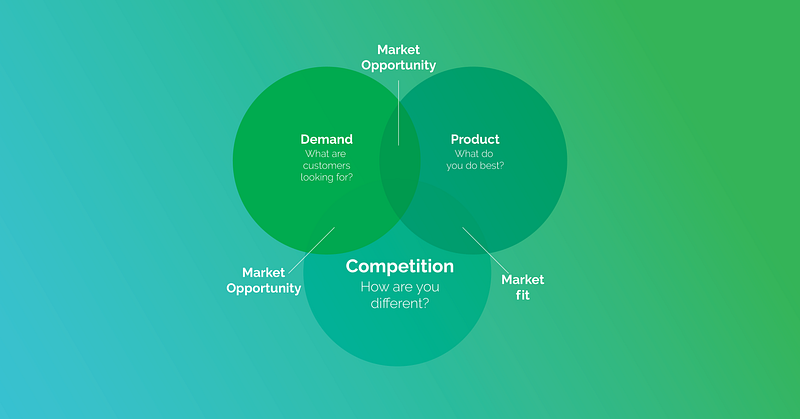
Investors want to grasp the size of the market, learn about the addressable market characteristics as well as understand historic and future trends for the very segment you intend to target. They are also interested in your solution and business model’s sustainability advantages. Most importantly, before they invest in you, they will want evidence that you have some significant advantage that the competition cannot easily overcome.
You must paint a clear picture of your firm’s meaningful competitive advantage and growing market opportunity, so you will receive questions like:
- Who is this product for? Who is likely to want, need, and purchase this product? Are people already buying similar products, and if so, who are those people?
- What is the actual addressable market?
- What percentage of the market do you plan to get over what period of time?
- What other vendors or products exist in your space?
- How did you arrive at the sales of your industry and its growth rate?
- Why does your company have high growth potential?
- What is unique about the company?
- What sources did you use for your research?
Traction
The definition and metrics associated with traction are as varied as types of investors. But, traction is simply the bottom line. Mark Suster, serial entrepreneur and investor, explains it best “traction can simply mean showing that you’re making progress with customers, product development, channel partners, initial revenue as a proof point, attracting well-known angel investors, winning industry awards/recognition.”
Traction is essential for both investors and entrepreneurs because it focuses efforts on the milestones that yield results. Investors will insist on evaluating your progress because it directly impacts their decision to invest or not. Your ability to gain traction demonstrates:
- Validity of your business model
- Interest in your product/service
- Adoption rate which implies market size
- Sustainable growth
All very important metrics in overcoming objections — investor risk, realistic market potential, and scalability. The ability to demonstrate you are ready to scale indicates you are a “sure bet” to sophisticated investors. You have proven on some level that people will pay for what they’re selling and they’ve proven they can repeat said process. Therefore, what you’re really saying is that investors are not gambling on your experiments or forecasts. The more traction you have, the more that you’ll be able to persuade the investor and dictate the terms of the potential investment.
The metrics vary based on your venture’s industry, business model, business life cycle, and investor profile and expectations. Whilst you must tailor the specific metrics accordingly, below are some areas that help demonstrate your ability to build your company.
- Set realistic milestones and achieve some: You can’t measure results if you don’t have a yardstick.
- Get a real customer and real revenue: If you give away your product or service to the first 10 customers, that’s a good learning experience, but it’s not real traction. It doesn’t prove your business model of pricing, distribution, and support. Sell one.
- Product and Team Development: Each build and iteration of your product shows traction. The different stages of a product’s evolution mark an important step in the development of your business, and an opportunity to show what you’ve learned in the process.
- Social Proof: the endorsement for your business by others; however, its value and legitimacy is proportionate to the value and legitimacy of those endorsing you.
- Market Penetration: demonstrate significant inroads into the desired target audience.
How much customer traction is enough? There’s no single answer to how many customers, or how much revenue, is “enough.” Ultimately, the amount of traction depends on the investor’s risk appetite and expected return on investment. There can be no doubt that the more traction you are able to demonstrate, the more credible you appear. But what really matters is the “bottom line” — prove your case by demonstrating a consistent and repeatable pattern.
So with a bit of luck and lots of preparation you’ll snag an investor and partner!
About the author: Linda Holcman is an expert in driving growth — branding, new market entry and demand generation, yield entry into new markets, increasing customer loyalty and mindshare, and driving sales.